Olive Schreiner House
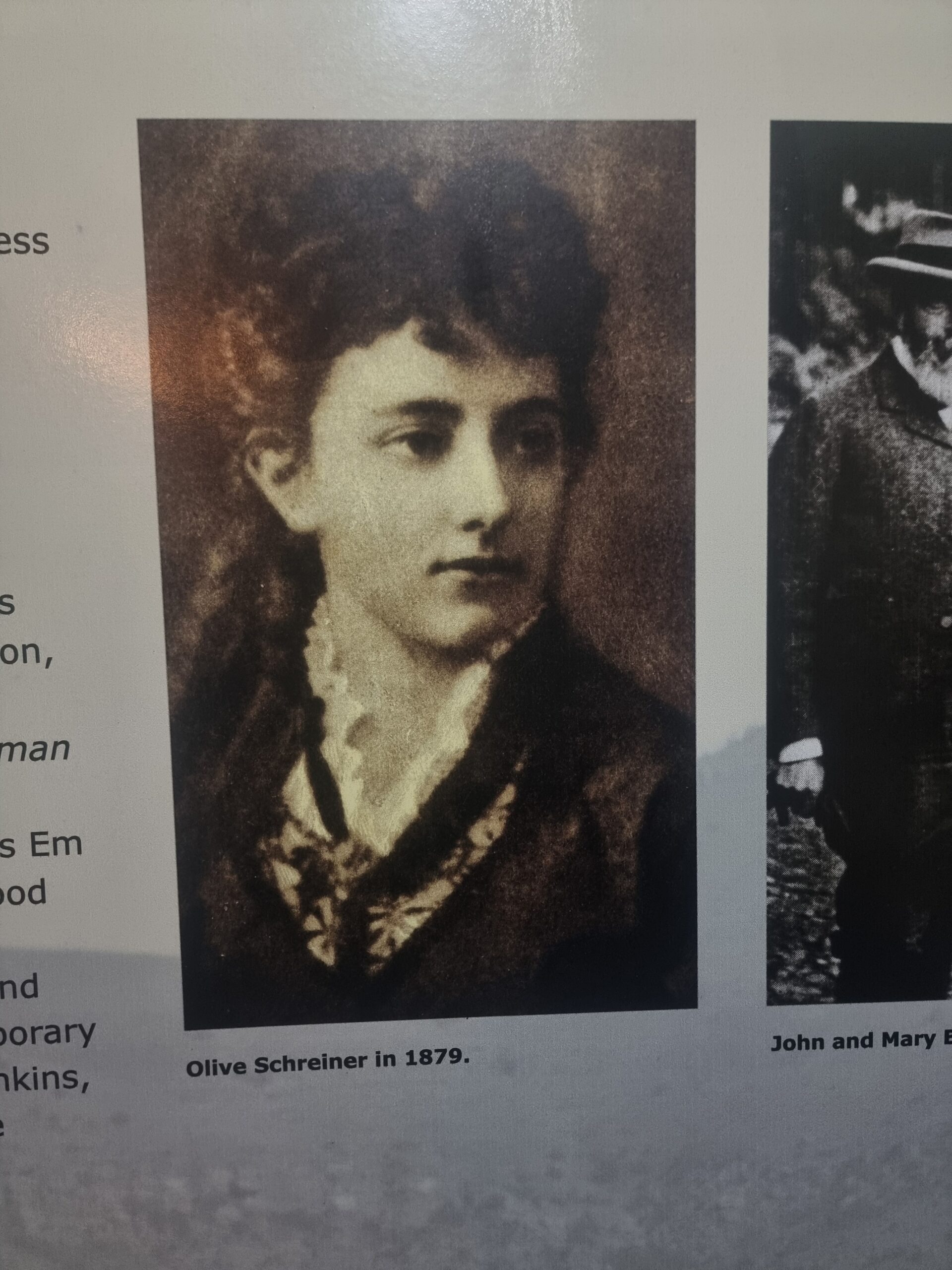
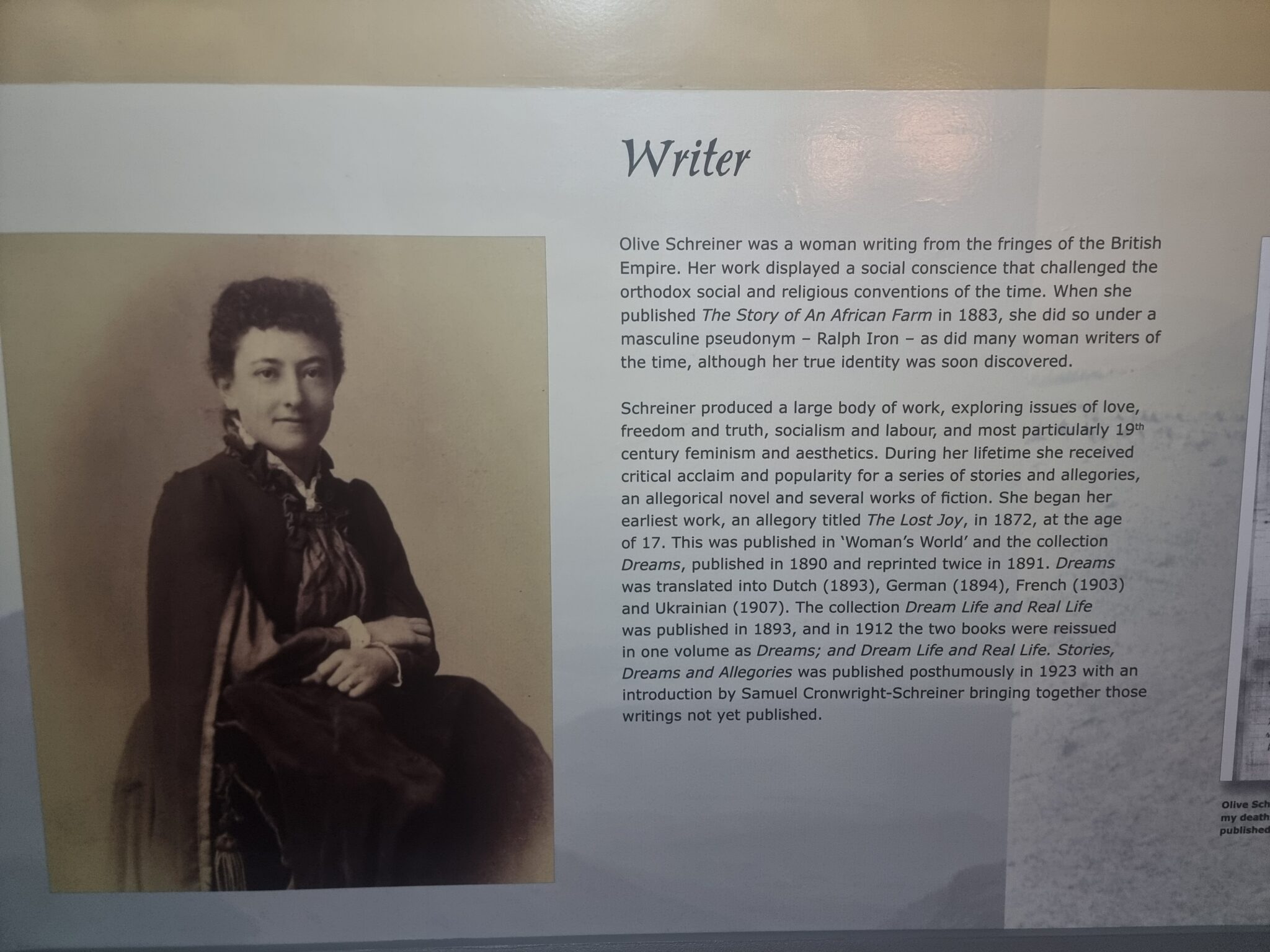
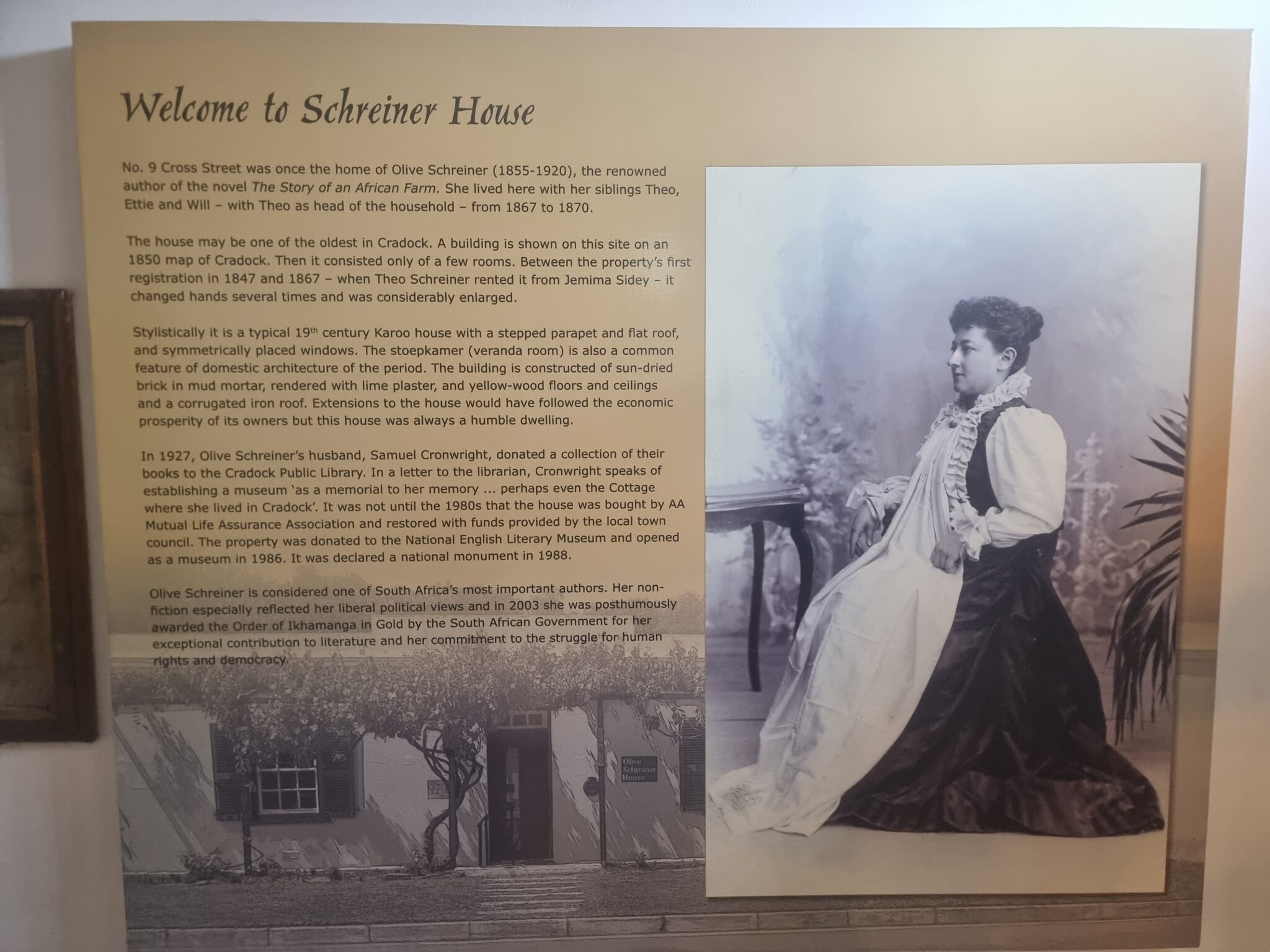
I visited the Olive Schreiner Museum in Cradock — and it felt like stepping into a part of South African history that most people don’t even know exists. I expected a museum about a writer. Instead, I found a whole life woven into the landscape of this country.
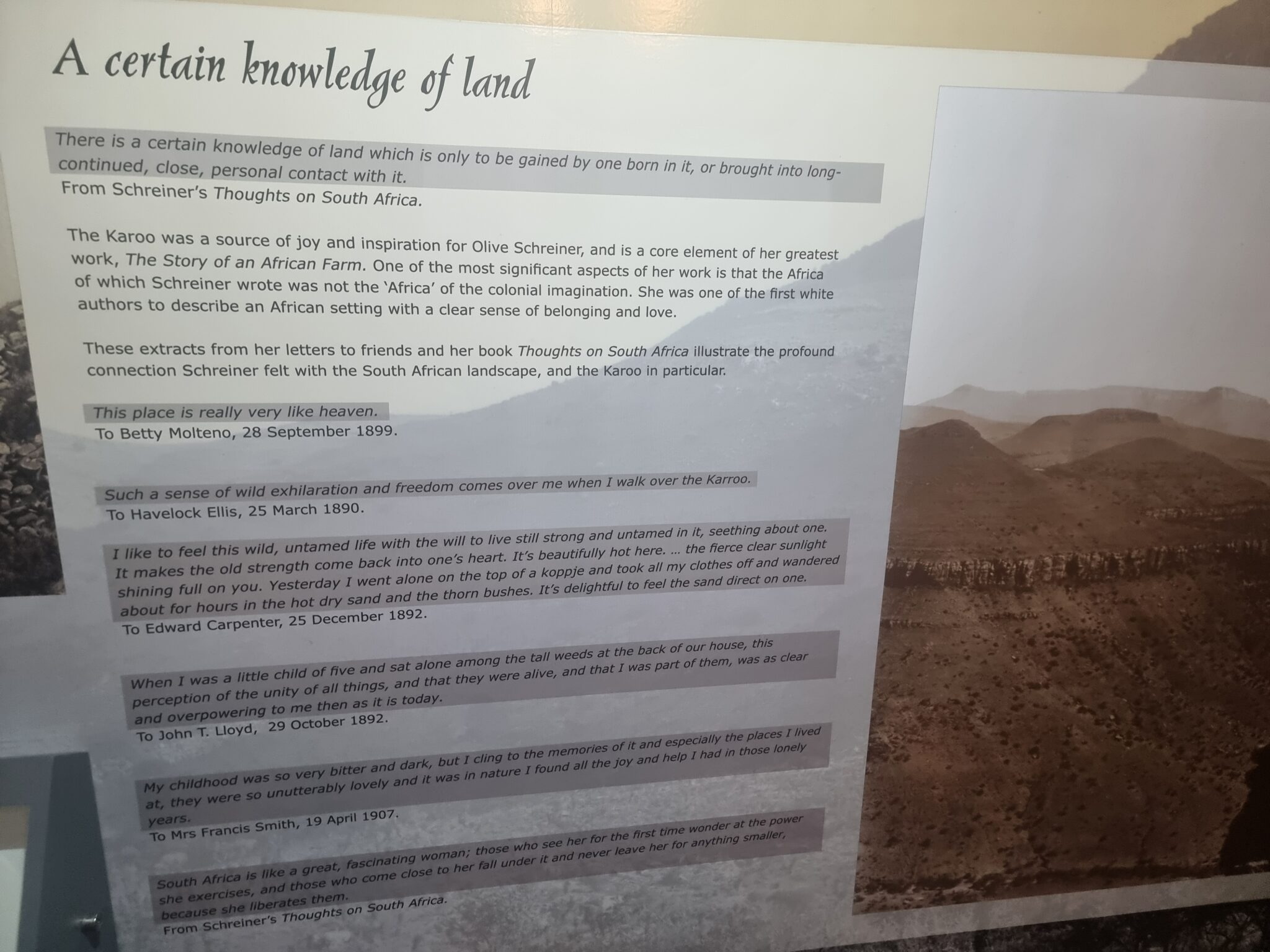
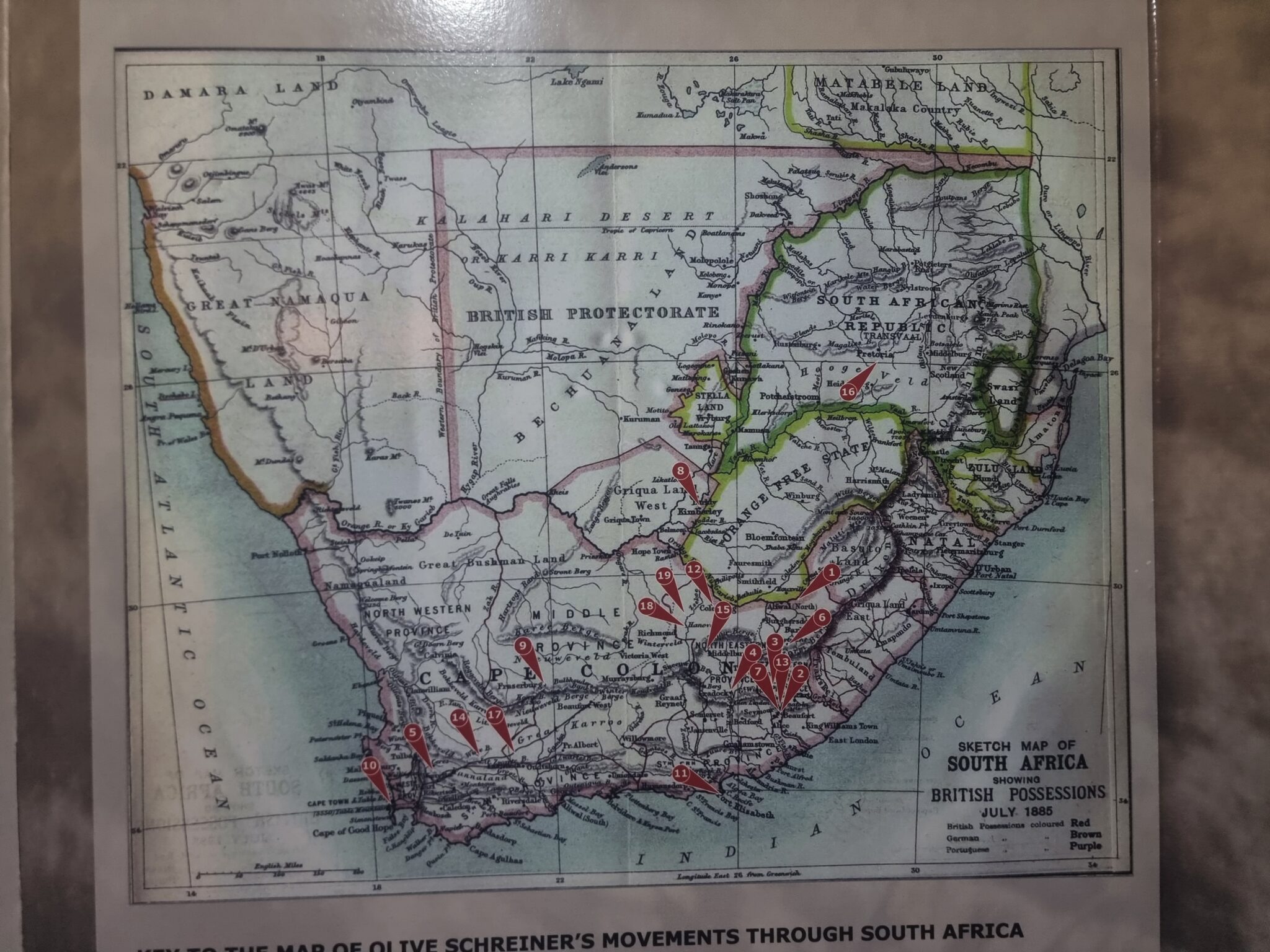
What struck me most was how deeply the Karoo lived inside Olive Schreiner. She wasn’t shaped by one hometown; she was shaped by movement.
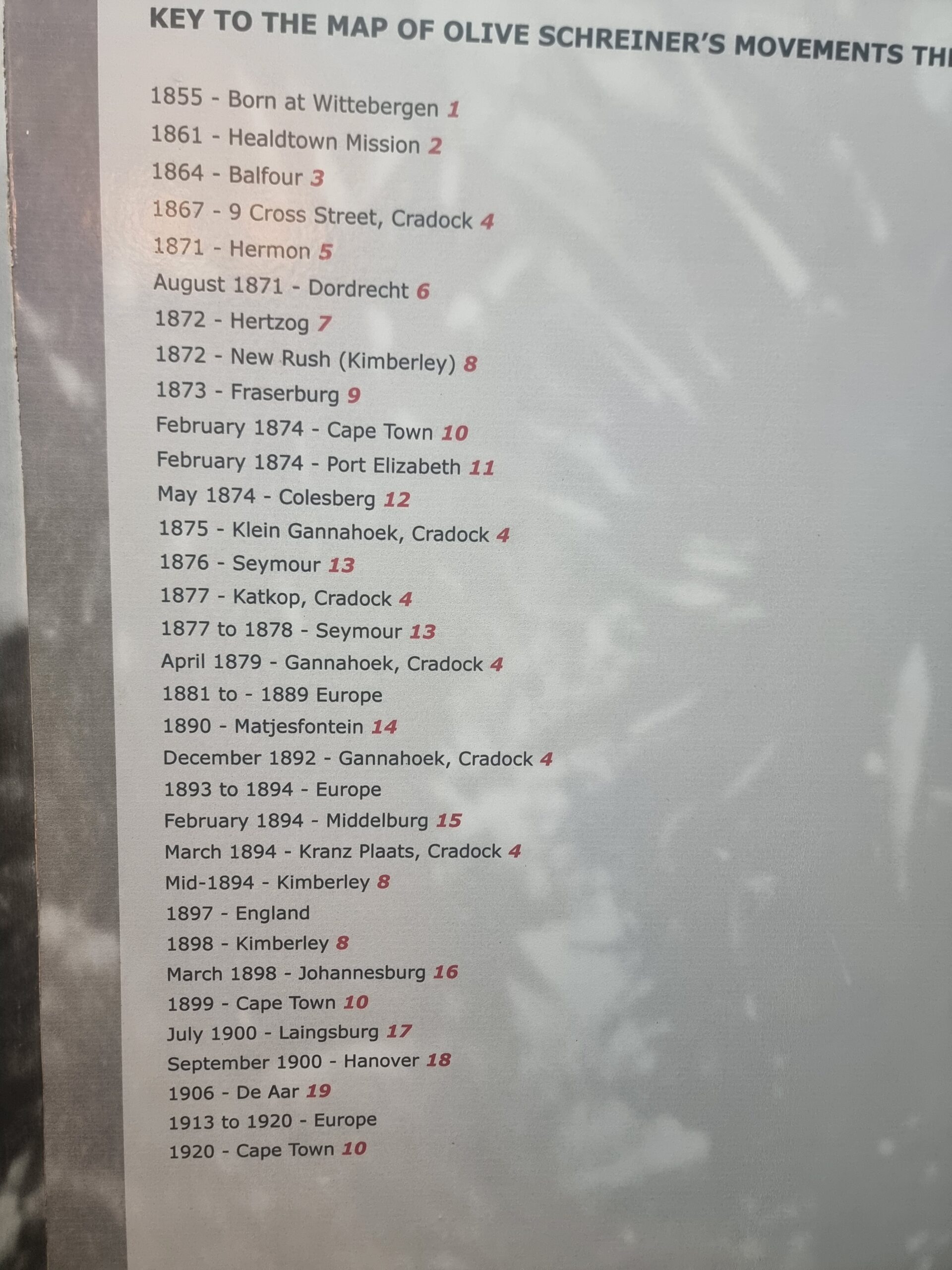
Her childhood and early adulthood took her across the country — from Wittebergen to the Eastern Cape mission stations, to Cradock, to Colesberg, Kimberley, Matjiesfontein, Johannesburg, the Free State, and later Europe. She was constantly in motion, constantly absorbing different worlds, different faces, different struggles.
And you can see it in her writing: her empathy, her worldview, her refusal to accept easy answers. The land taught her how to think.
It made me wonder how different our lives are today. Most of us are convinced to stay in one place, often not by choice but by circumstance. Sedentary living — whether designed by colonial systems, economic systems, or simply the momentum of modern life — has become normal. Millions of South Africans live in conditions that are difficult to escape, stuck in one spot not by physical chains but economic ones. And it makes you think: how much broader would our understanding be, how much freer our thinking, if movement was still part of our lives the way it was for people like Olive?
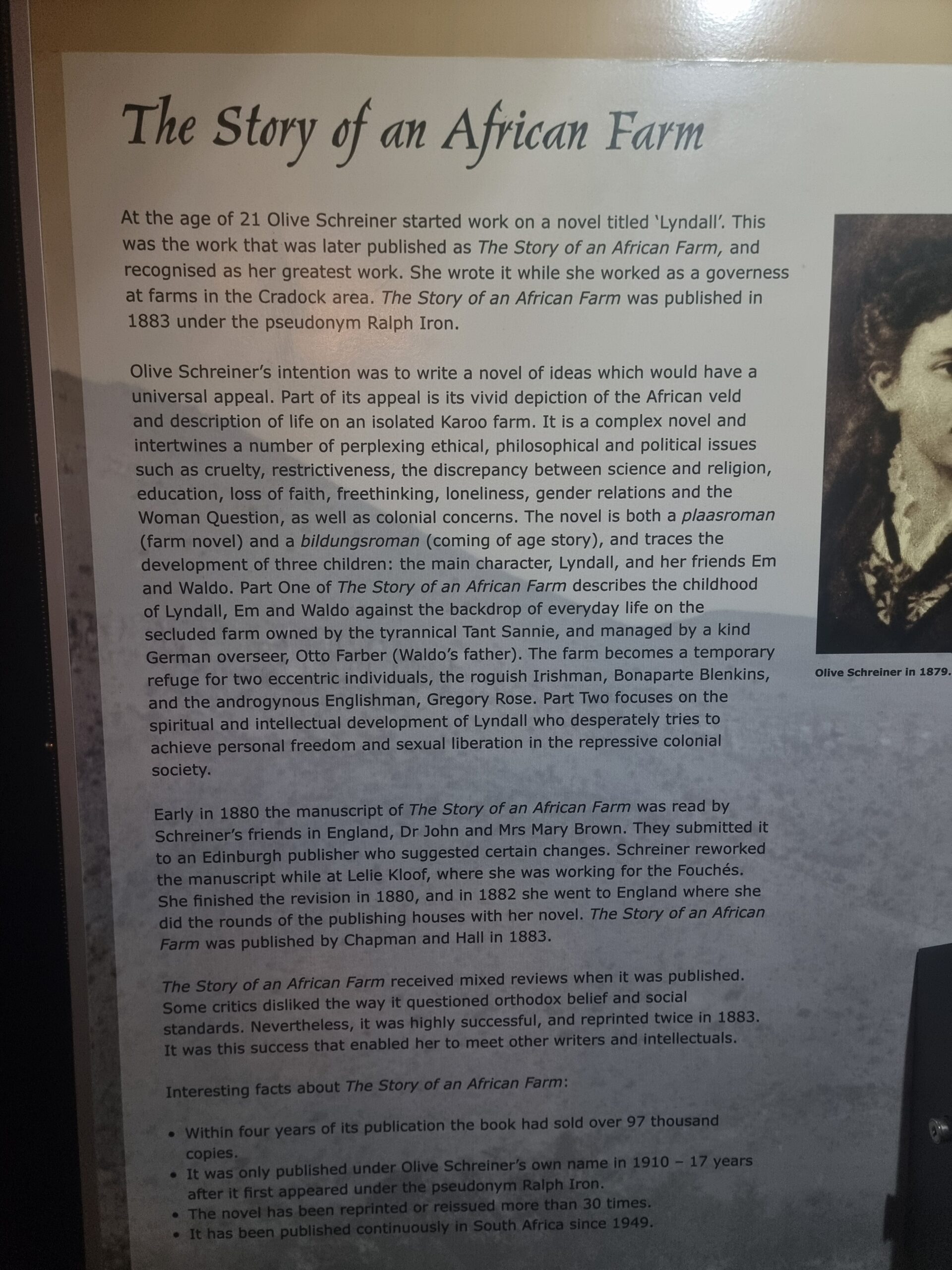
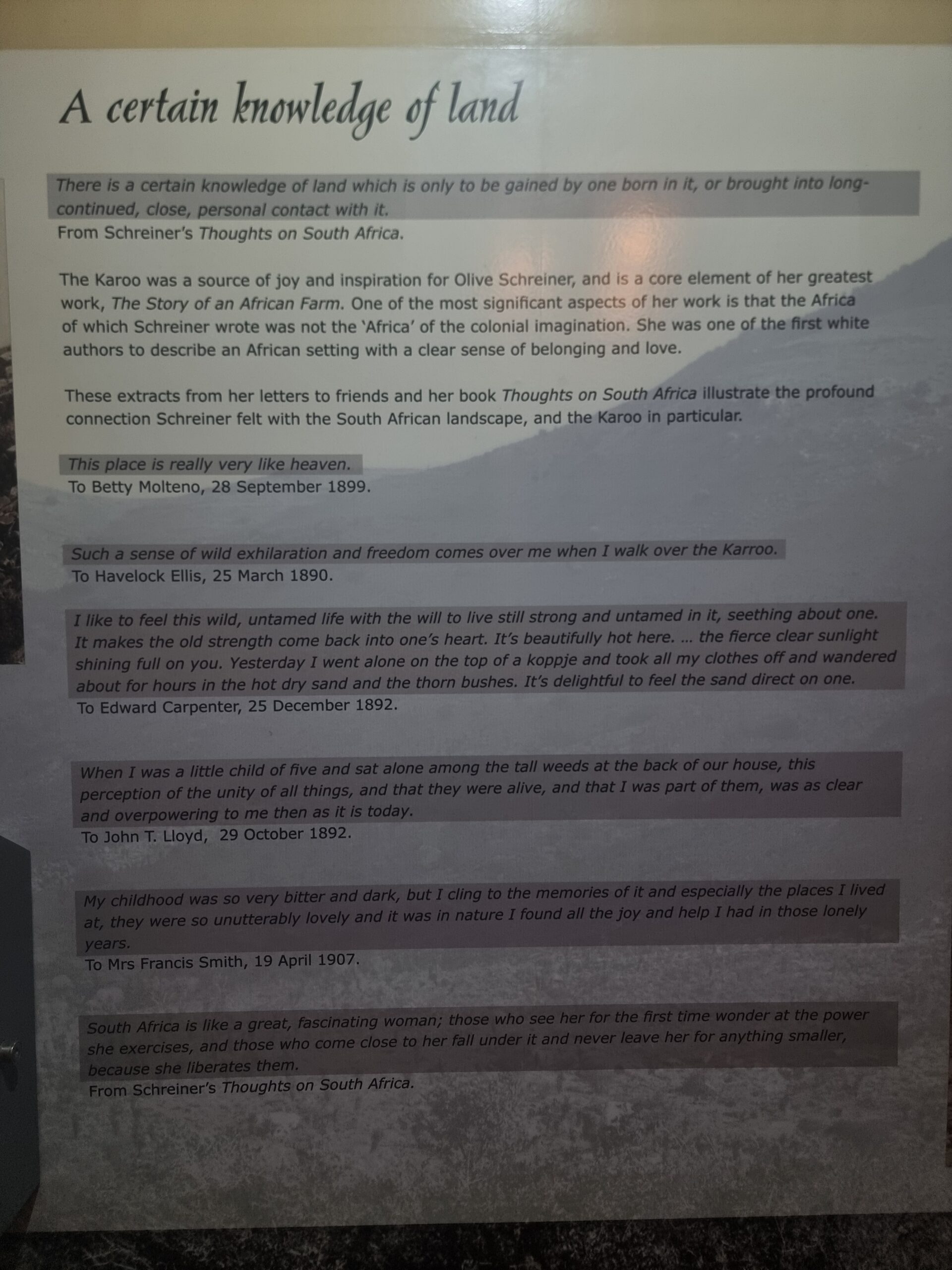
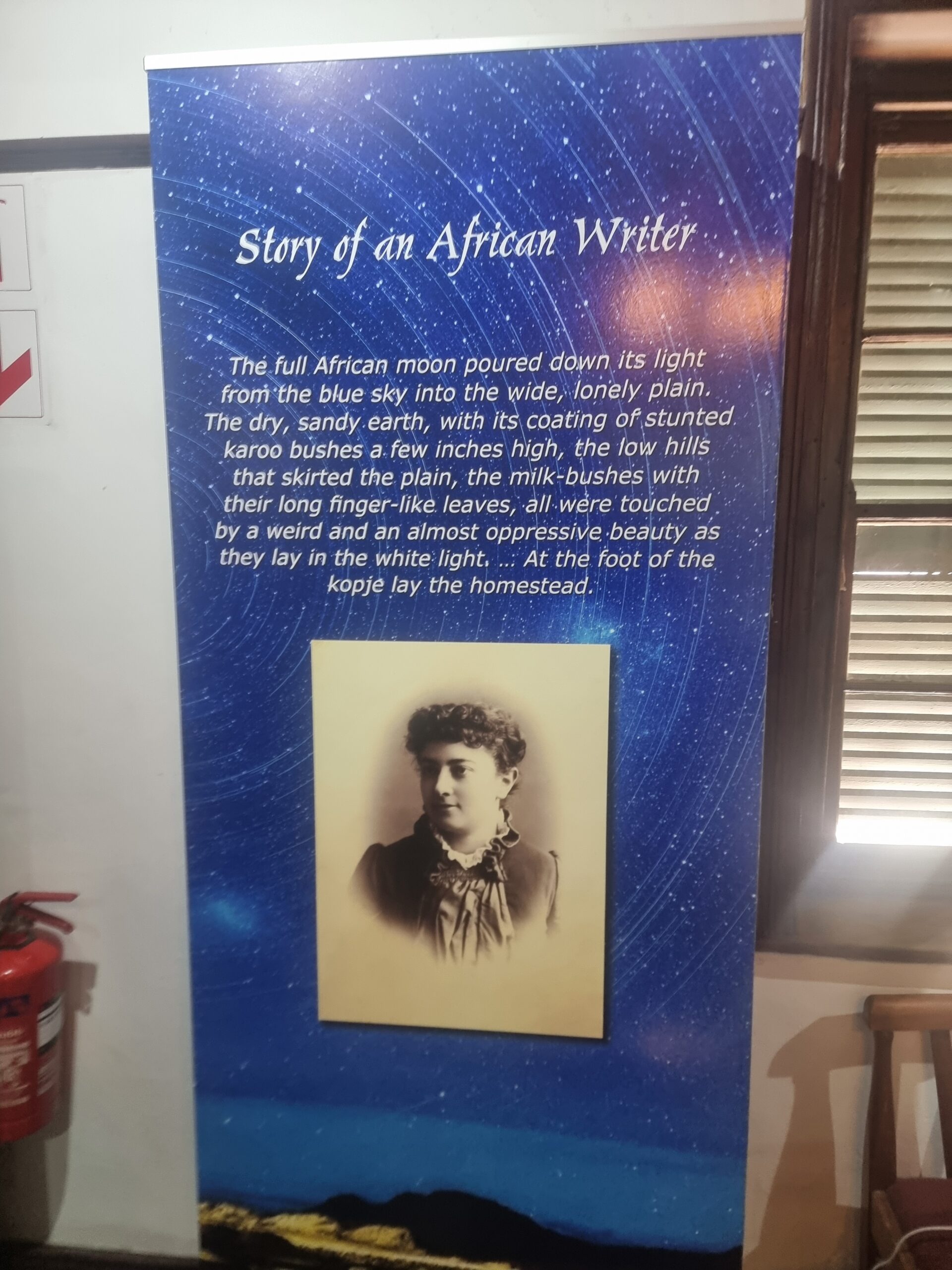
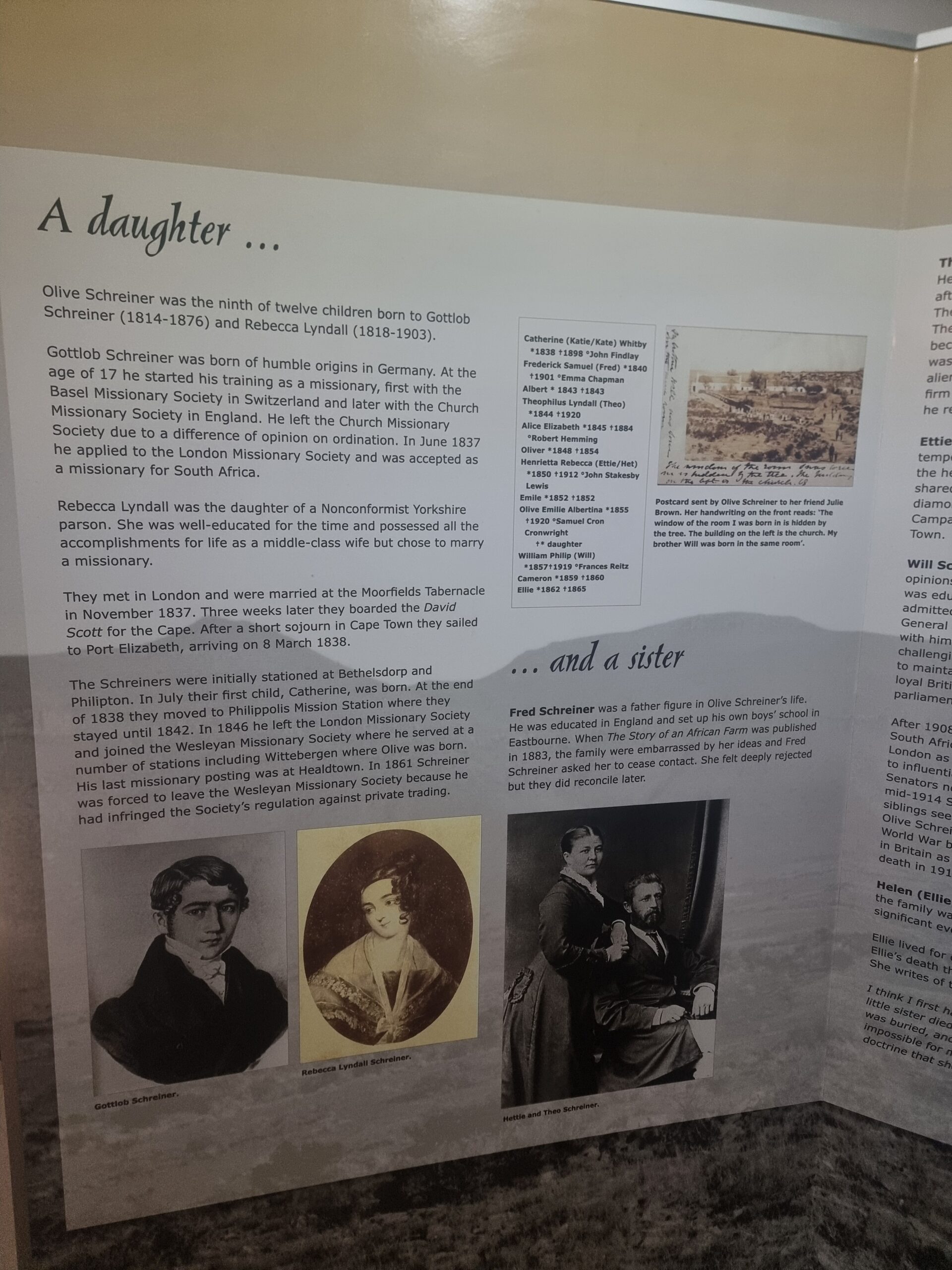
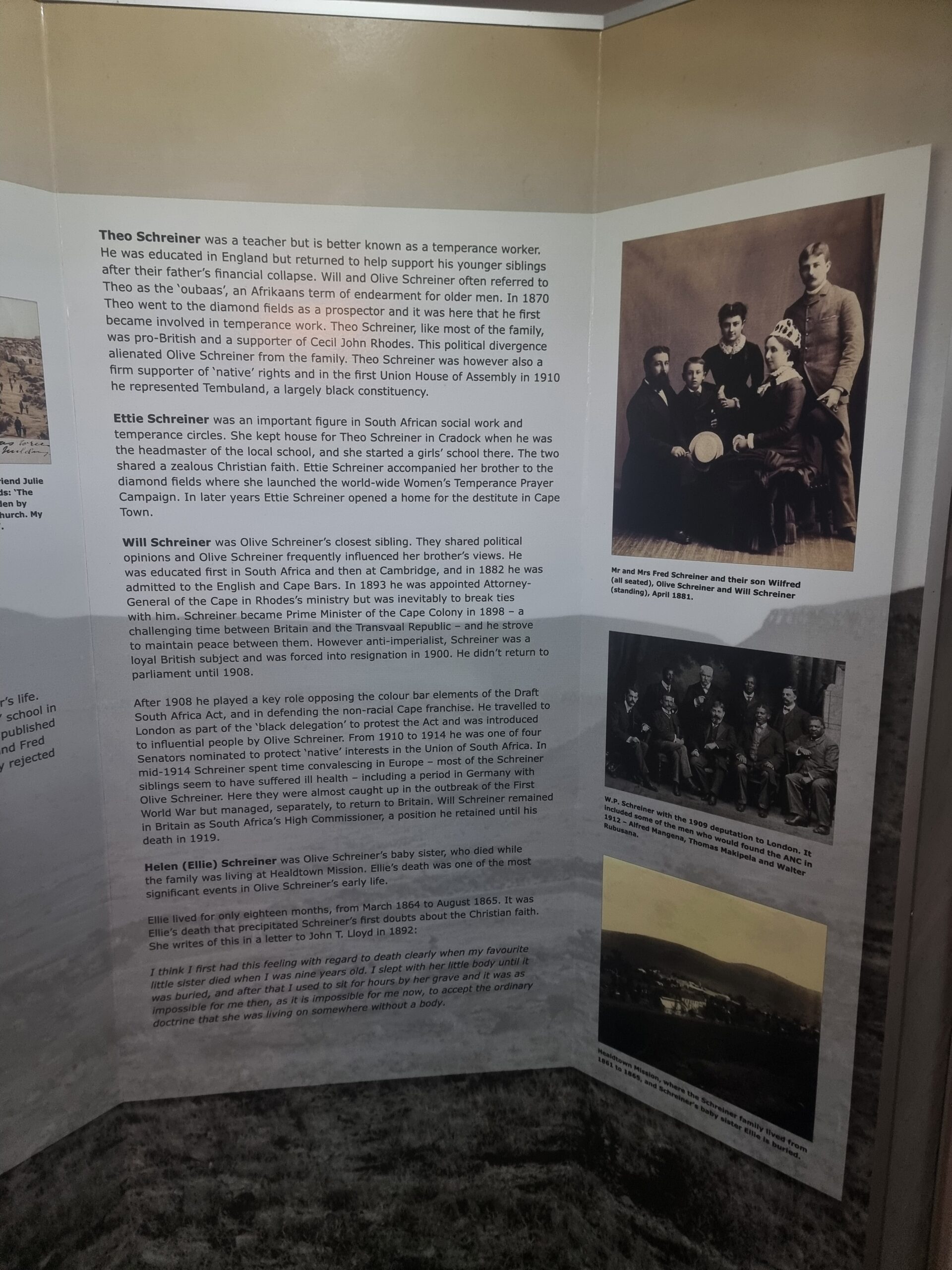
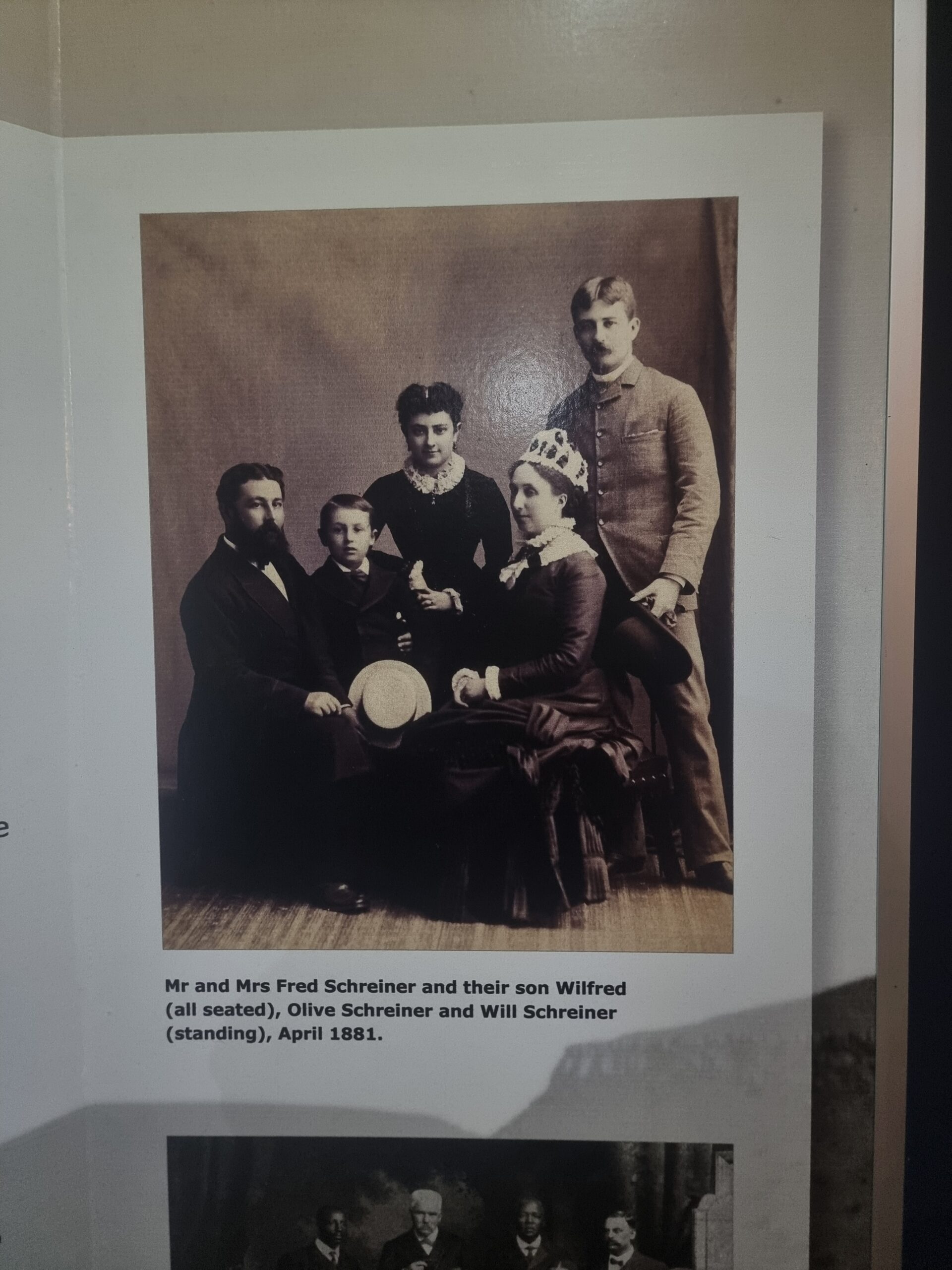
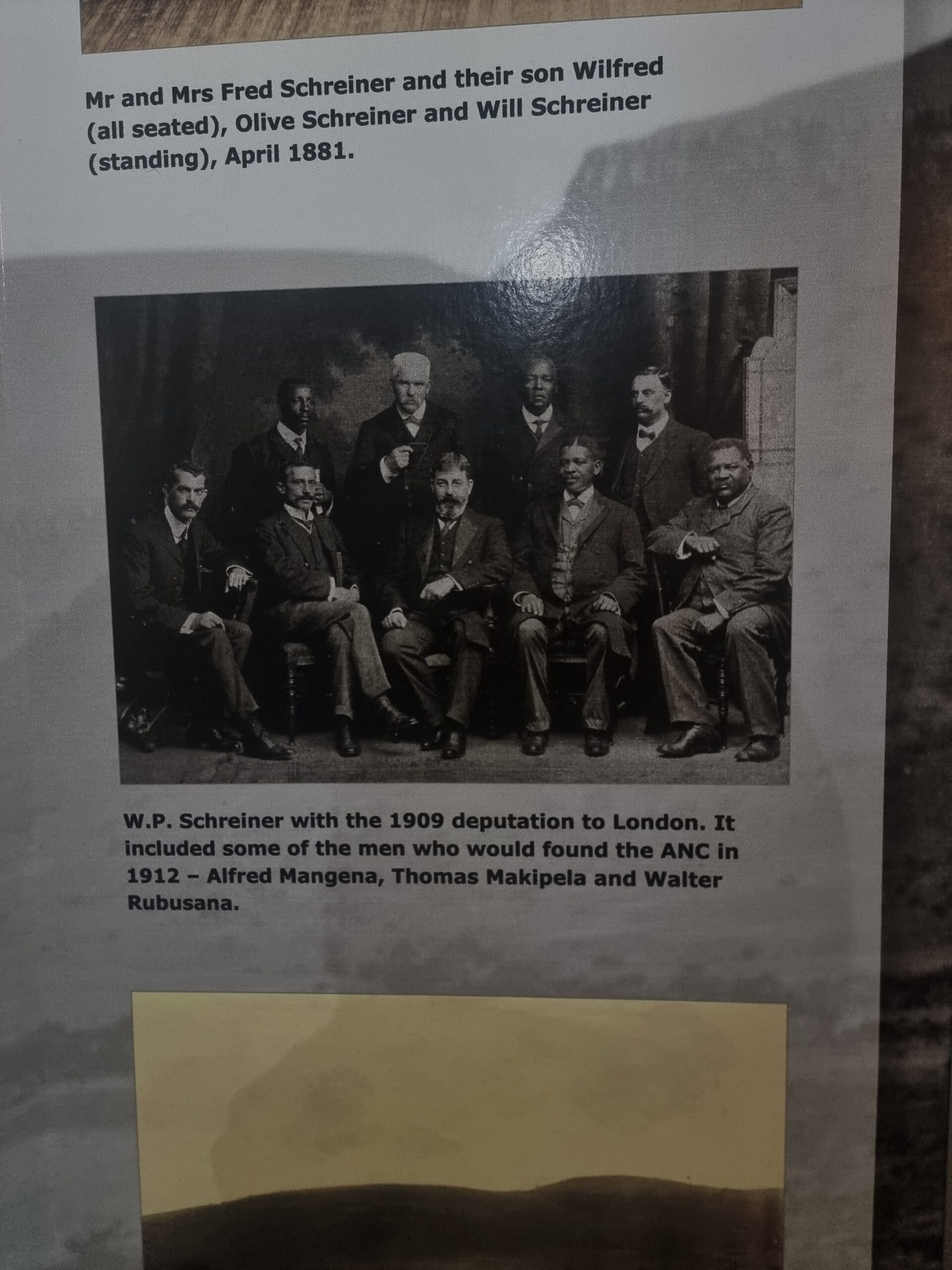
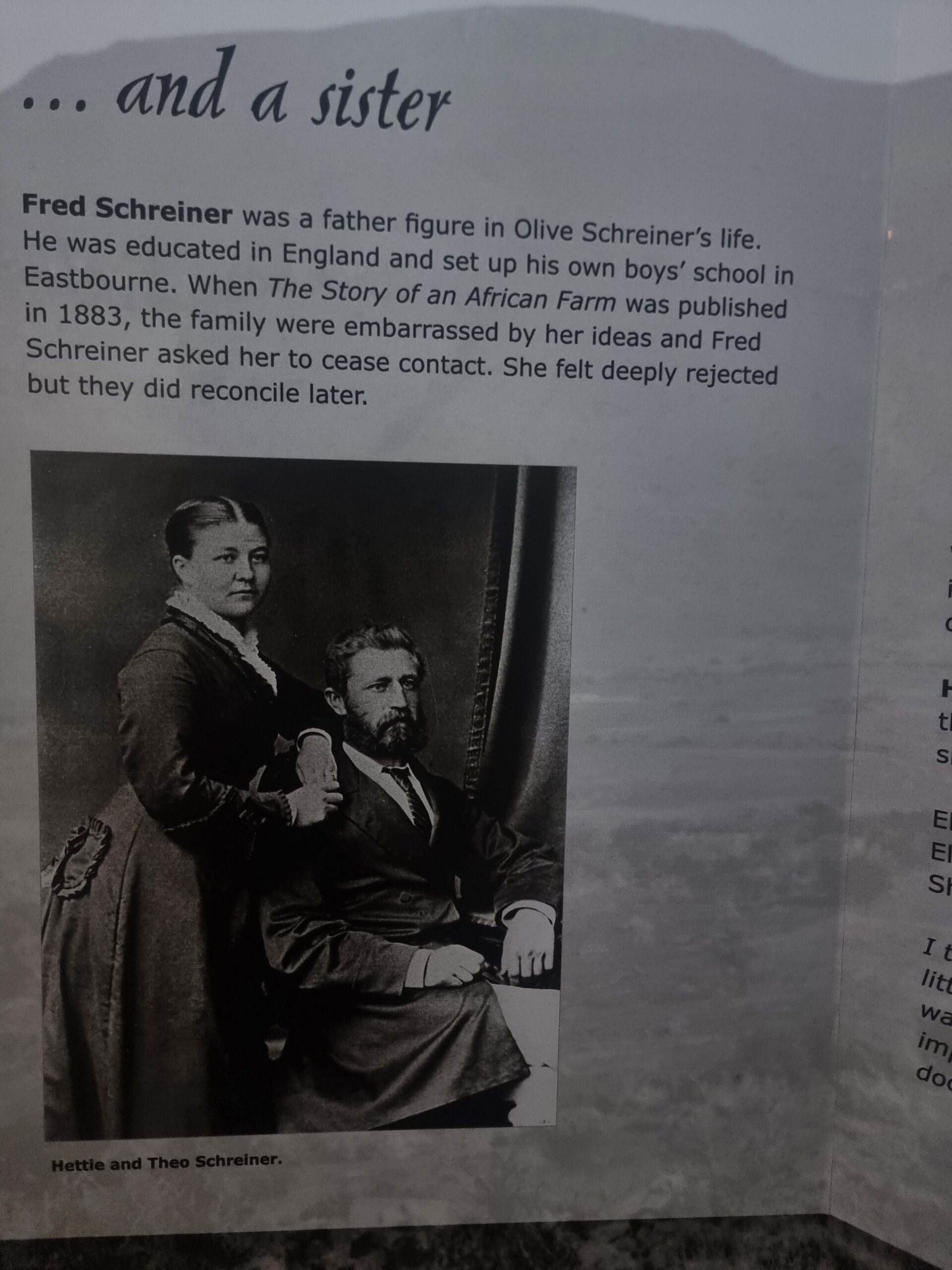
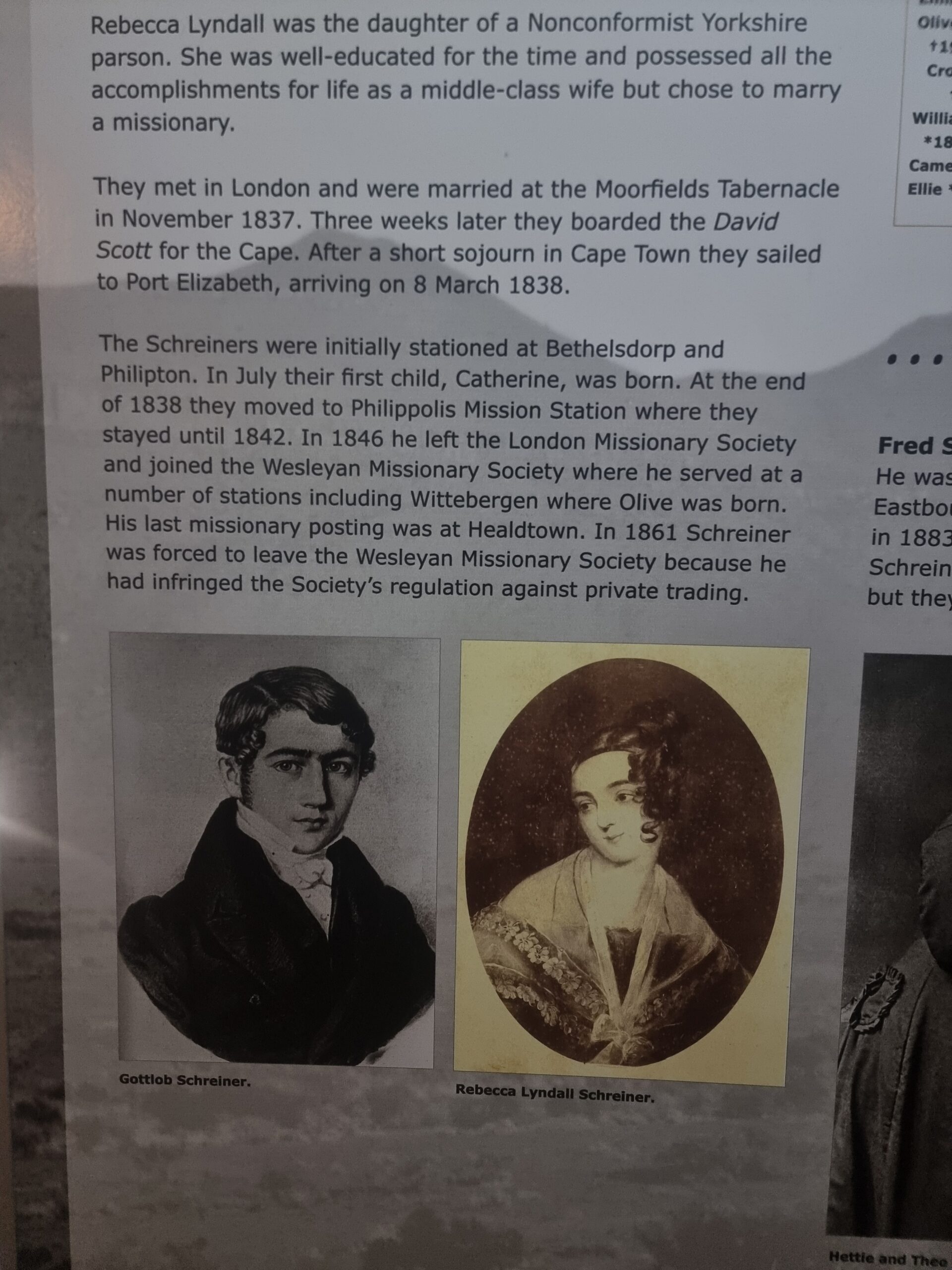
The museum also taught me something I never expected: Olive Schreiner had a complicated history with Cecil John Rhodes. They were close, close enough to influence one another, yet she openly criticised him and the British government when she believed their actions were unjust. She was fearless in her thought. A true free-thinker ahead of her time.
As I read her words on the walls — about the Karoo, freedom, loneliness, labour, gender, race, and the human condition — I felt a connection I didn’t expect. Travelling this country the way I have has shaped me too. With every town I visit, every museum, every forgotten story, something inside me shifts. Things in me that need mending start to untangle. Things I thought I understood get rewritten. The land has a way of teaching you if you let it.
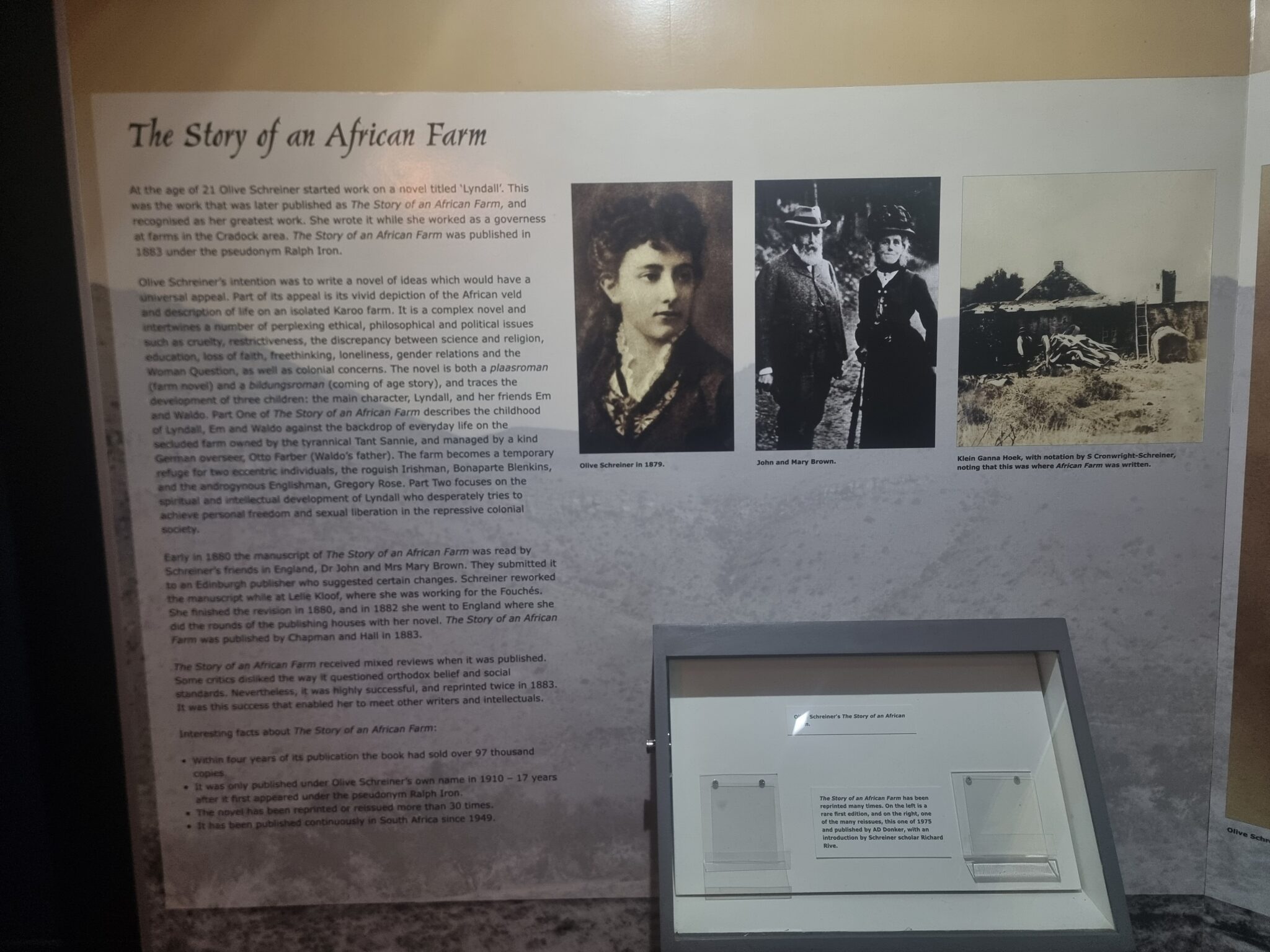
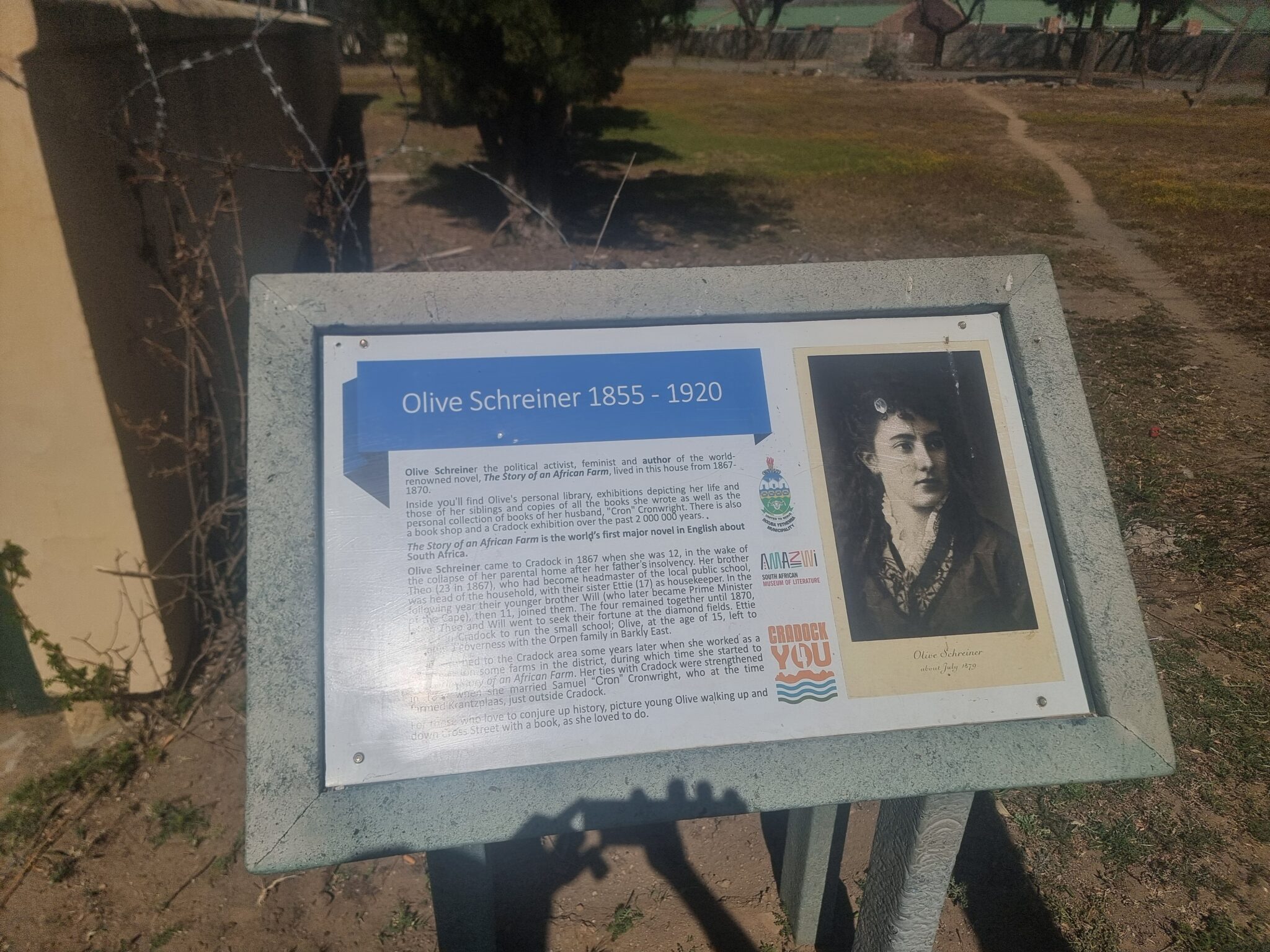
South Africa is layered, complex, sometimes painful, sometimes beautiful — and people like Olive help you see it with clearer eyes. Her voice is one of those quiet ones history almost loses, but it carries enormous weight when you actually stop to listen.
This museum may be small.
But what it holds is immense.
And I’m grateful I got to feel it.