Rich Kid Smart Kid
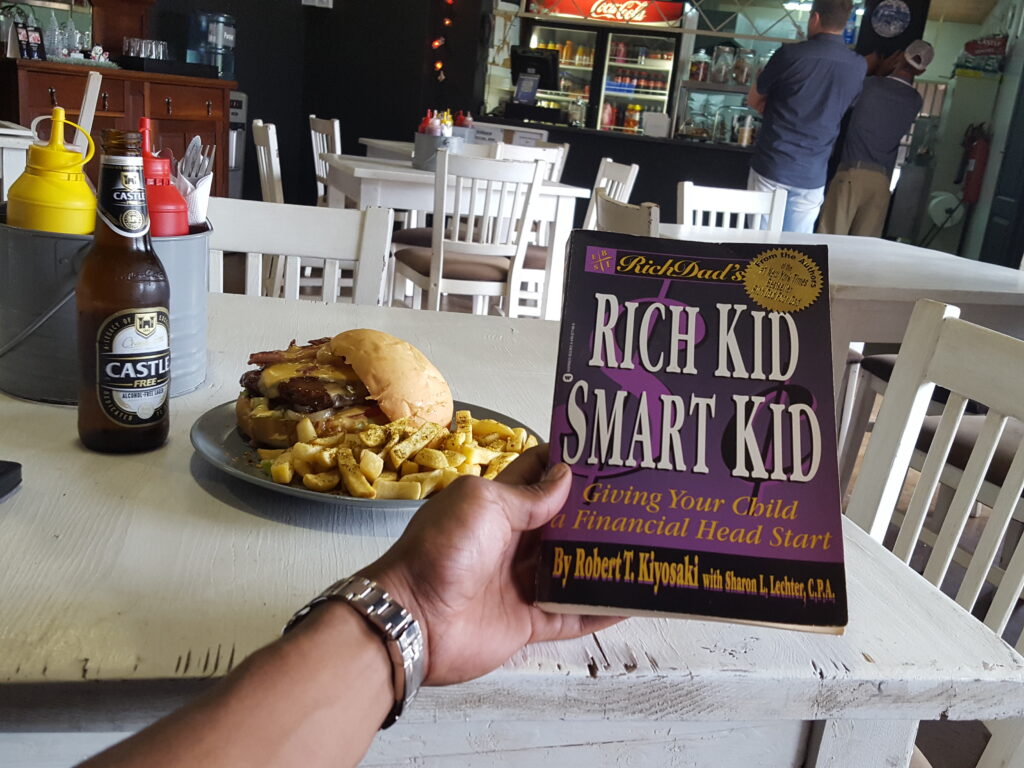
Reading “Rich Kid, Smart Kid – Giving Your Child a Financial Head Start” by Robert Kiyosaki was a good experience, providing a fresh perspective on financial education for children. Kiyosaki, known for his “Rich Dad” series, brings his straightforward, no-nonsense approach to this book, emphasizing the importance of financial literacy from an early age.
The book offers practical advice on how to introduce kids to the concepts of money, investing, and financial independence. It highlights the gaps in traditional education, which often overlooks financial literacy as a key component of a child’s development. Kiyosaki presents strategies for parents to help their children understand the value of money, the difference between assets and liabilities, and the importance of entrepreneurship and investing.
Reflecting on “Rich Kid, Smart Kid,” I can’t help but think about how different my life might have been if I’d grown up with the financial principles Kiyosaki outlines in this book. Growing up in the South Durban Basin in South Africa, my understanding of money was limited, shaped by the environment and circumstances we lived in. We didn’t grasp the true nature of money or the importance of financial literacy, something I’ve only come to learn through books and the insights of wealthy people I’ve met over the years.
My parents did their best with what they had, and our story is not unique—it’s the story of millions of South Africans who grew up in similar or worse situations. Money was always a point of contention at home; it was scarce and a source of stress. Witnessing my parents’ constant struggles and arguments over finances profoundly influenced my own relationship with money. It became something I was emotionally charged about, viewing it as a scarce resource that should be clamored at, rather than a tool that could be managed, grown and used effectively.
I now understand that making sound financial decisions requires a level of rational thought and emotional detachment that I wasn’t taught. It requires being prudent, it requires patients and learning from mistakes—both your own and others’. I wish I had been taught the ‘why’ behind saving and investing, not just that I should save. The principles in this book, and others like it, provide that much-needed perspective, offering a framework for understanding what money really is and how to use it wisely.
One of the standout aspects of “Rich Kid, Smart Kid” is its emphasis on learning through experience. Kiyosaki encourages parents to involve their children in real-world financial situations, like managing a small business or understanding investment opportunities, to provide a hands-on understanding of money management. This experiential learning approach aligns with the belief that financial acumen is best developed through practical application rather than theoretical knowledge alone.
Despite my lamentations, I’m grateful for what I’ve learned over the past decade. The knowledge I’ve gained from countless books on wealth and prosperity has not only changed my financial outlook but has also improved my overall happiness. Implementing these lessons has given me a more hopeful view of the future, something I didn’t always have.
What’s most important about books like “Rich Kid, Smart Kid” is that they offer the chance to change the narrative for the next generation. I now have the opportunity to teach my children the financial principles I never knew. I can protect them from the hardships I faced and pass on the knowledge I’ve gained. In this way, I can “right” the “wrong” of my own childhood, breaking free from the seemingly inescapable monument of poverty I once faced. These lessons allow us to create a new path, one where financial literacy and security are within reach, offering a way to change not just our own lives, but the lives of those who come after us.
In conclusion, “Rich Kid, Smart Kid” serves as a valuable guide for parents who want to give their children a head start in the financial world. It provides a framework for raising financially savvy individuals who can navigate the complexities of the modern economy with confidence and skill. The lessons from this book are not just about accumulating wealth; they are about fostering a mindset of independence, critical thinking, and lifelong learning. It’s about equipping the next generation with the tools and knowledge to build a secure and prosperous future.