Guide To Country Risk
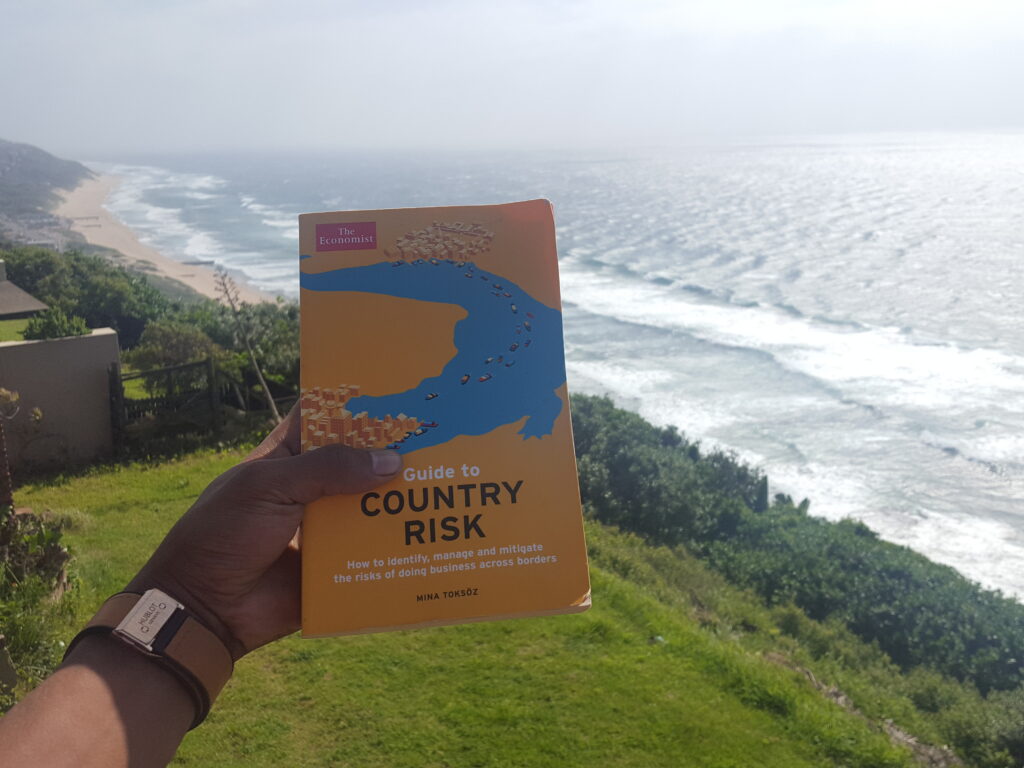
Guide to Country Risk by Mina Toksoz
When I first picked up Guide to Country Risk by Mina Toksoz in 2016, I was excited to dig deeper into the world of finance and geopolitics. I had been reading The Economist and The Wall Street Journal religiously, so I thought this book would help me connect the dots in a more structured way. While it wasn’t the most exciting read and came across a bit dry, it did introduce me to some important concepts that shaped my understanding of how global events and finance intersect.
The book is essentially a collection of case studies on financial topics, focusing on how different countries deal with crises, war, debt, and trade. What really stood out to me was how these issues, which often seem like distant or technical matters, actually affect everyone. It’s not just something for pensioners and older people—who always seemed to be the ones following these topics so closely in the newspapers—it’s relevant to all of us, whether we realize it or not.
Toksoz explains country debt and how finance professionals measure risk in different countries. There’s a lot of focus on economic indicators and how international banks decide if investing in a country is safe or not. For instance, she talks about political risk, which refers to how unstable governments or sudden policy changes can shake up a country’s economy. Even if these concepts felt technical at first, I started to see their real-world impact, especially in places like Mozambique or Nigeria, where political crises have ripple effects on the global economy.
One of the things I noticed and found interesting was the explanation of quantitative easing (when central banks inject money into the economy to encourage spending) and how it shapes financial markets. This tied into the broader discussion about commodity prices and OPEC oil surpluses—topics I had followed in the news but hadn’t fully understood until reading the book. Seeing how these elements fit together gave me a clearer picture of the complex forces driving the global economy.
What surprised me was how the book introduced me to the idea of creative destruction, a concept from economist Joseph Schumpeter. It’s the idea that old industries are constantly being replaced by new ones, driving innovation but also creating instability. This idea led me to dive deeper into Austrian economics and opened up a whole new way of thinking about how economies evolve.
Another big takeaway for me was the sheer scale of global capital. It’s one thing to know that massive amounts of wealth circulate around the world, but understanding the details—the cycles of commodities, bonds, and how international banks manage risk—was mind-blowing. We’re all part of this giant machine, even if we don’t fully grasp its complexity. In many ways, it made me think of how we’ve entered the Anthropocene, a time where human activity is so vast and complicated that it’s beyond our ability to fully comprehend. The scale of wealth moving through global systems can feel outrageous and even overwhelming.
Yet, despite all of this complexity, I found myself reflecting on my own goals. I’m not pursuing wealth for wealth’s sake—it’s more about dignity and self-respect. I realized that I can only achieve these things by becoming useful to society. The book reinforced that idea. It’s not about accumulating riches; it’s about understanding the systems that shape our world and finding a way to contribute meaningfully to them.
Reading this from South Africa, I started to see the global puzzle pieces fitting together with what I know of our local economy. Concepts like commodity prices, which are a huge part of South Africa’s economy due to our mining and natural resource industries, started to make more sense in the broader context. The same applies to the cycles of global capital and how shifts in international markets impact our own industries. For instance, when there’s a global surplus of commodities like oil or minerals, it directly affects local prices and job markets here. But beyond commodities, agriculture is another vital sector. The fluctuations in global grain prices, for example, directly impact the livelihoods of farmers and the availability of food, which in turn affects inflation. Droughts or political instability in other regions can suddenly spike the prices of essential goods here in South Africa, reminding me of how interconnected our economic systems are.
It was eye-opening to see how the political and economic decisions made across the globe can impact us at home, whether through the prices of goods, inflation, or the availability of investment capital. Agriculture, like mining, is deeply tied to these global shifts, and understanding these connections makes it easier to see how local decisions often depend on global trends.
By reading Country Risk, I gained a clearer understanding of how global economics and local economics are intertwined. The financial issues that seem far away—like wars, political crises, or even central bank policies in other countries—have a direct impact on us in South Africa. It helped me see how every piece of the puzzle fits together, and why it’s so important to be aware of these global dynamics. We’re all connected in this vast economic system, and while it’s easy to feel like we’re just small cogs in a huge machine, understanding the bigger picture helps make sense of what’s happening around us.
One of the subtler lessons I picked up was how these “boring” financial concepts, like debt ratios or political risk, are hugely impactful. They may not be thrilling, but they determine the stability of nations and the opportunities available to people. I started seeing why the older generation—the pensioners, for example—would spend their evenings reading financial papers. They had a sense of how much these topics matter, even if the rest of us don’t always pay attention.
In the end, Country Risk gave me more than just a look into finance. It opened my eyes to the global forces at play, from wars and crises to economic policies. It’s a reminder that these things shape our world in ways we often overlook. While the book didn’t offer jaw-dropping revelations, it provided a framework to understand how capital, risk, and politics intersect—and that’s something we all need to be aware of, whether we’re interested in finance or not.